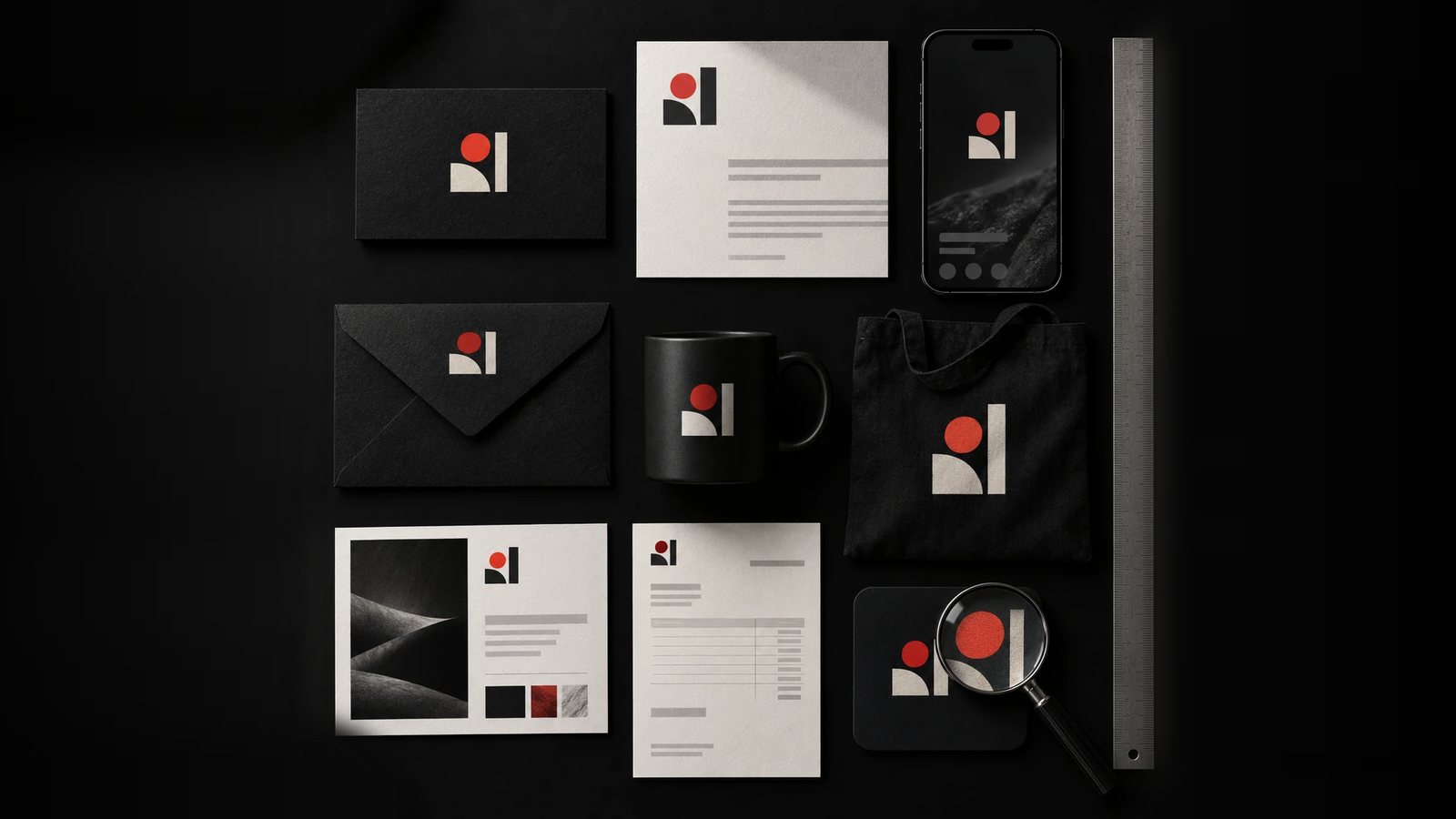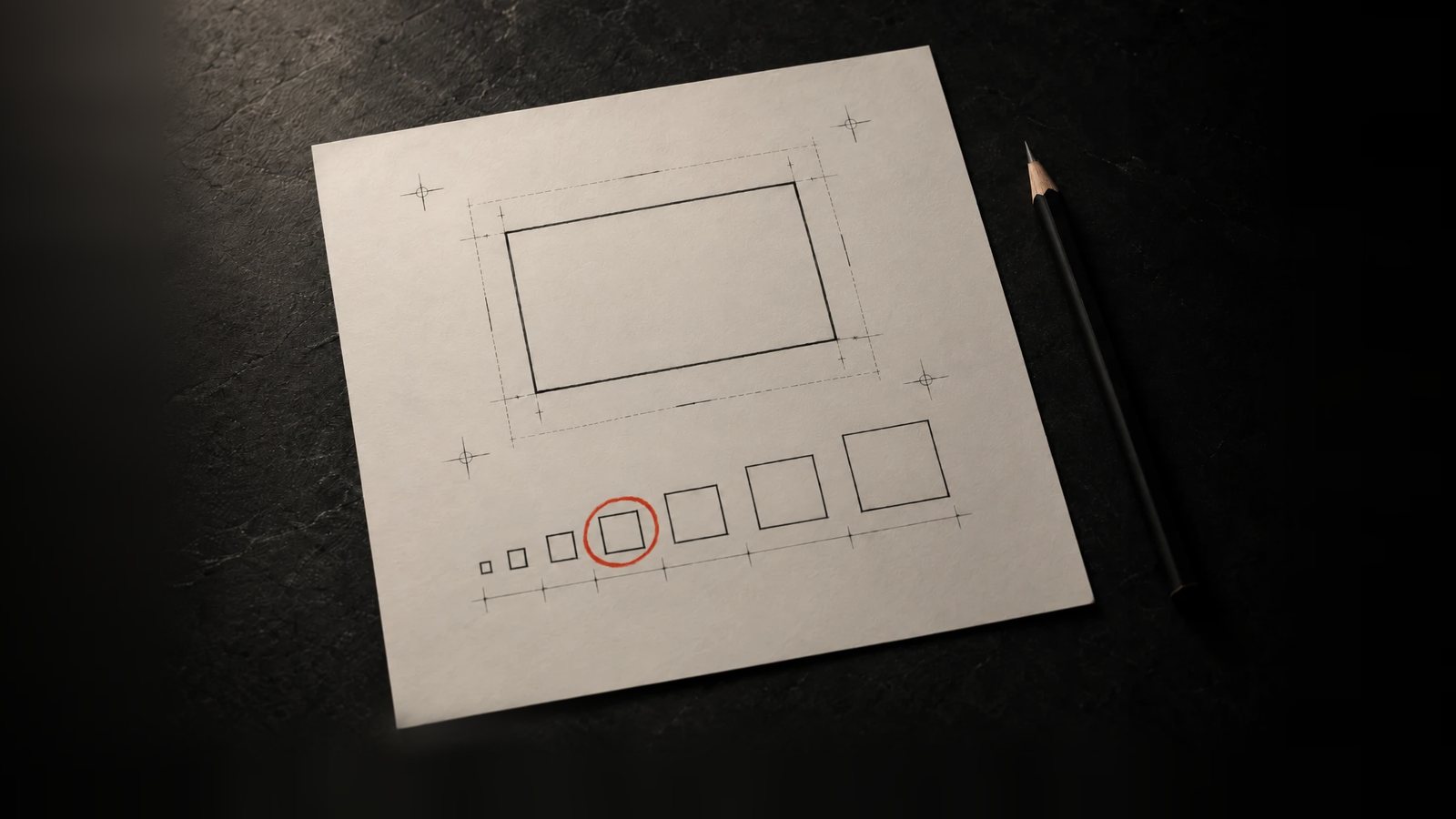
A good brief is short, specific and honest about constraints. It gives a studio something to push against.
Write down the problem, not the solution
“We need a new logo” is a solution. It tells a designer what to produce without telling them why, and without that, every option looks equally defensible. Purple Squirrel came to us with a cartoon squirrel in glasses carrying a briefcase, a mark that was friendly but belonged to a smaller, more casual company than the firm had become. The brief was “keep the squirrel, and give it the polish of a firm that places executives”: a problem statement specific enough that every concept could be judged against it instead of reacted to on sight.
Name your audience, and the brands you refuse to resemble
Who has to notice the change first, and which brands do you never want to be mistaken for? Both answers narrow the field faster than any mood board. On The Human Experience Co., the client named its direct competitors outright: MindsOpen and August. The brief wasn’t just “look professional enough for senior executives and human enough to be believed,” it was that plus an explicit instruction that the mark and palette needed to look like nobody on that named list. That single line ruled out an entire visual territory (the blue-on-white, geometric-monogram look of management consulting) before we drew a single concept.
Naming a reference point works even when it isn’t a competitor. On Online Speechie, the brief pointed to Lovevery, a children’s brand outside the client’s own category, purely as an example of how colour should feel: warm without being saccharine. We never asked “what do you like,” which gets you a Pinterest board. We asked “show us a brand that gets the tone right, even if it’s not in your market,” which gets you a brief we can actually design against.
Give every goal a number
“Make it versatile” tells a designer nothing a size chart wouldn’t tell them better. Purple Squirrel’s brief included this goal word for word: one mark that works on a lanyard, a billboard and a 160-pixel website header, in a palette the client had already chosen. That’s a brief with a built-in test. A designer can hold a concept up against “does this still read at 160 pixels” in a way they can’t hold it up against “feels premium.”
Sovato’s brief did the same thing from a different angle. The company was building a remote-surgery platform in stealth mode, and the requirement was that the mark be slick and contained enough to sit inside a web, mobile and app interface as well as on a slide deck. That constraint (where the mark actually has to live) did more work than any adjective about ambition or sophistication could have.
Decide who signs off, and when
Surprises late in a project cost more than any design revision, and most of them come from a sign-off chain nobody agreed to upfront. We run two structured revision rounds on every deliverable, one after the first concepts and one after refinement, and we say so before the first concept exists, not after a client asks for a third round. Put that same expectation in your own brief: who approves each stage, how many rounds are built in, and what happens if the team can’t agree. It’s a harder conversation to have before a project starts than during one, which is exactly why it belongs in the brief.
What a sharp brief actually buys you
The Human Experience Co.’s brief was sharp enough that the entire project, from the first diagnosis call to a finished 10-page guideline with logo files, slide templates and business card layouts, ran in about two weeks. We could not set that pace from our side. It came from a client arriving already knowing who they’re for, who they refuse to resemble, and who signs off, so the whole project was spent making decisions instead of discovering what the decisions should be.