Launch day is the easy part. The real test of an identity is the fortieth slide deck, made by someone who never met the designer.
Systems over assets
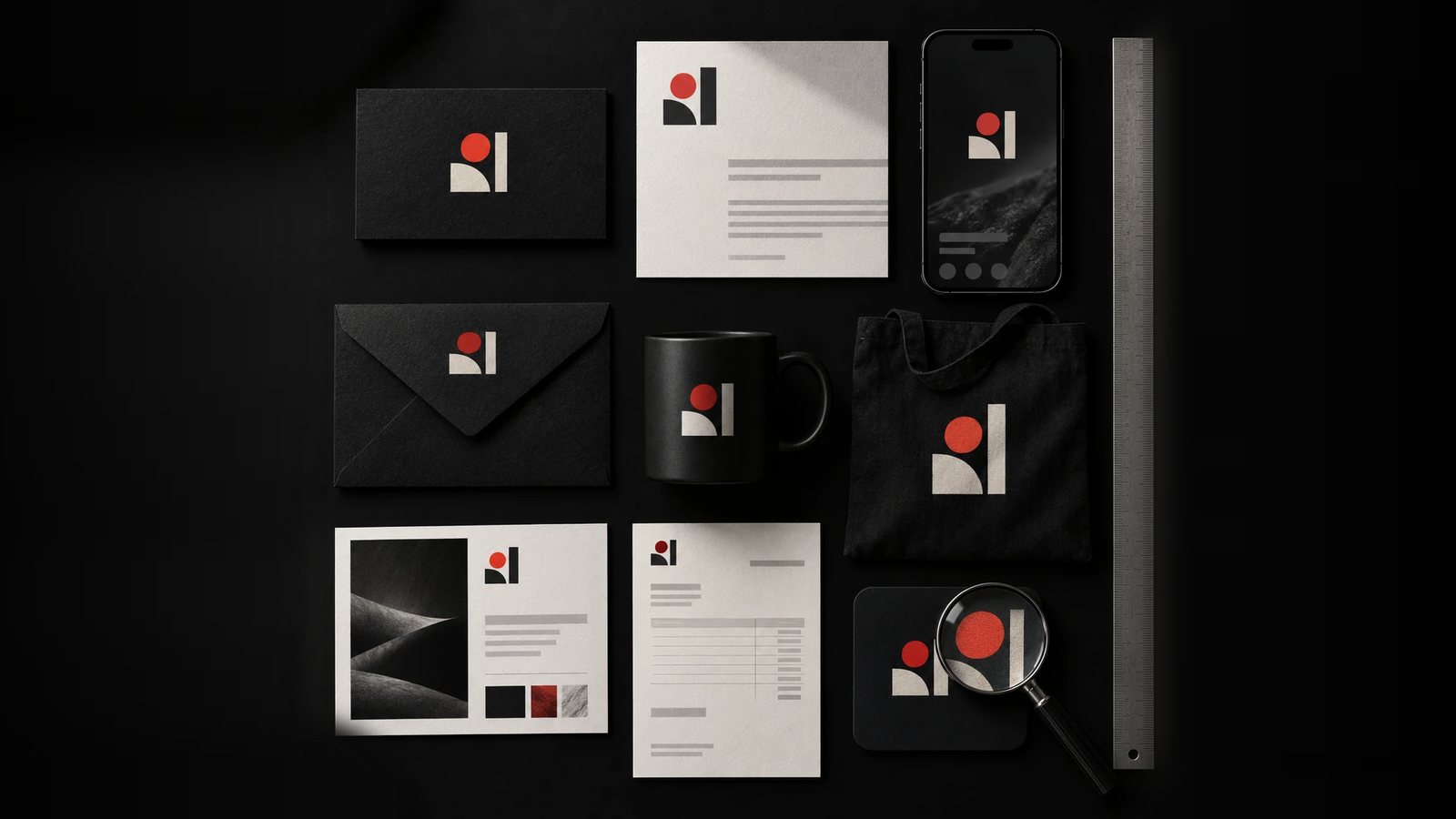
A folder of logo files does not scale. Rules do: how colour is weighted, how type behaves at different sizes, how much space a mark needs around it before it starts to feel crowded. On Purple Squirrel, that meant a 14-page guideline built around a plum, magenta, indigo and beige palette with three supporting greys, six defined colour pairings, a 160-pixel minimum width for the mark, and a fixed clear-space rule, all before a single poster or business card was mocked up. The guideline is the set of constraints someone else uses to make the forty-first thing we never see.
Make the right thing the easy thing
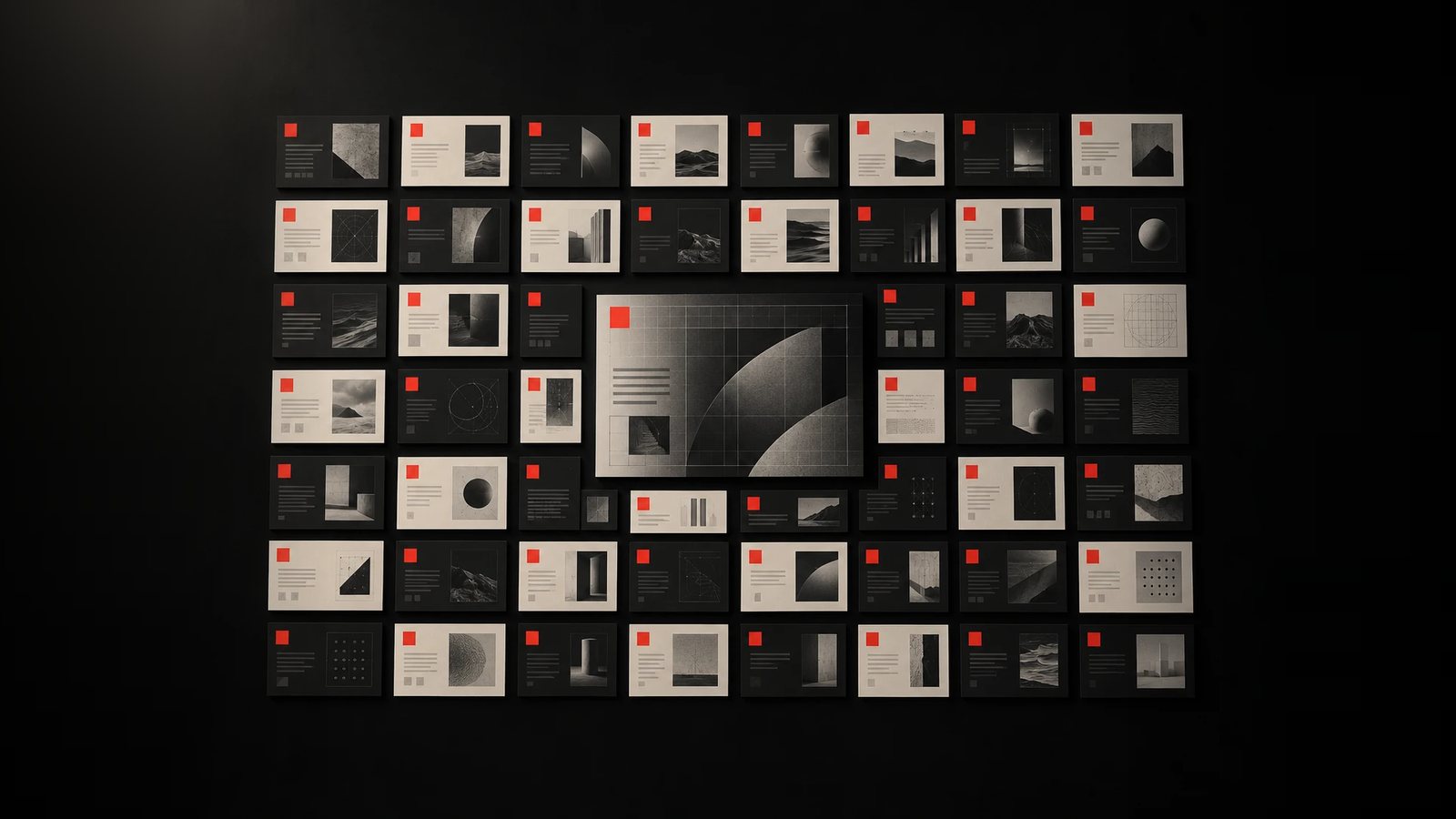
The fastest way to lose brand consistency is to leave every application as a judgement call. On The Human Experience Co., the client had an internal presentation two days after we delivered the identity, so the guideline shipped with slide templates built in, because a slide deck was the very next thing someone on their team had to make without us in the room. Templates and ready components remove the need for someone to reconstruct the logic themselves under deadline. Consistency comes from making the correct version the default.
Write the rule that prevents the mistake
Most guidelines document the ideal version of a mark and stop there. A system built to last has to anticipate how it gets misused once the people who built it aren’t watching. On Sovato, we tested the client’s palette against itself and advised against mixing colours inside the mark, a rule that exists specifically because a two-colour version is the first thing someone reaches for when a single flat colour looks “boring” on a slide. We also found that some of the client’s own stated brand colours didn’t match their documented RGB values, a small inconsistency that would have quietly spread into every file built from the wrong source. Catching it once, in the guideline, is cheaper than catching it forty times in forty separate documents.
Plan for the edges
Social avatars, invoices, a sign above a door. The unglamorous touchpoints are where brands most often fall apart, because they’re the ones built last, by whoever is least familiar with the system. Purple Squirrel’s guideline included mockups for badges, posters and street-facing signage alongside the obvious business card and letterhead, specifically because a mark that reads perfectly on an 8.5-by-11 page can fail completely at the scale and distance a hanging sign demands. Designing those applications up front, rather than leaving them for whoever inherits the brand later, is what keeps a logo from being reinvented badly the first time it meets an unfamiliar format.
What actually stops the drift
Every project we finish ends the same way: the client owns every file outright, nothing licensed back, nothing held over them. That’s deliberate, because a system that only works while the original designer is reachable is a dependency. The guideline, the templates and the rules that prevent misuse are what make the identity survive contact with someone who never met the person who designed it, which is the only real test an identity has to pass after the first year.